Step 1: The Introduction
Every assessment starts with understanding the object.
- What is it?
- Where did it come from?
- Do you have any documentation?
- Are there particular details you’d like us to consider?
You don’t need to know all the answers.
The purpose of the initial conversation is simply to establish what we’re looking at and what you’d like to understand about it.
Step 2: Examination
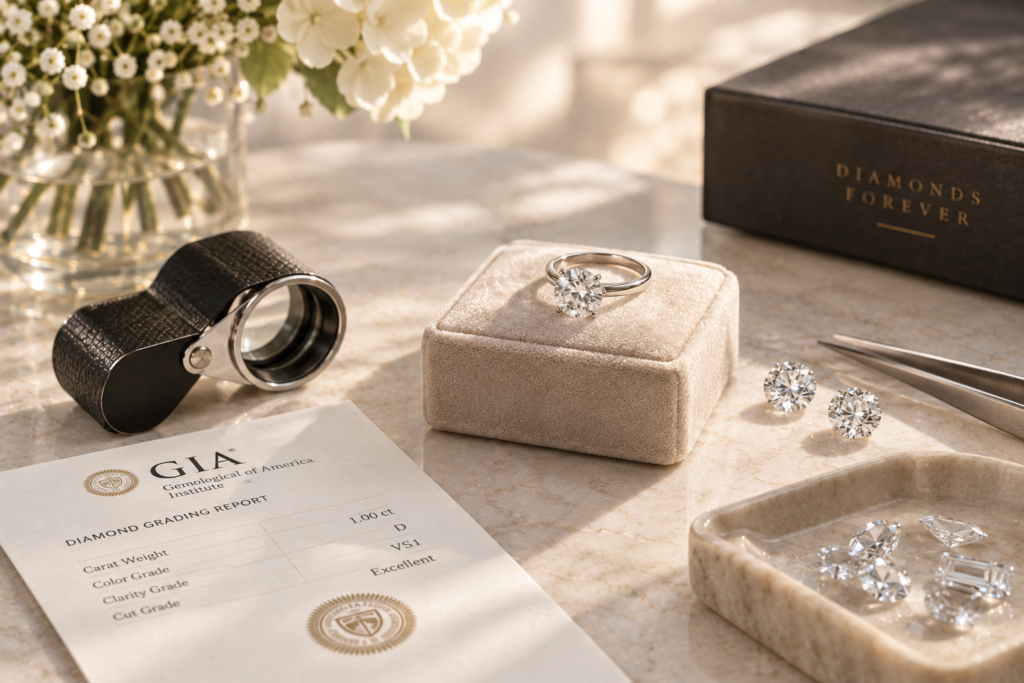
The next stage is a closer examination of the piece.
Depending on the object, this may include looking at:
- Metal type and purity
- Weight
- Construction
- Gemstones
- Hallmarks and stamps
- Brand or maker
- Condition
- Originality
- Documentation and provenance
Different objects require different approaches. A gold bracelet, vintage watch, diamond ring, and silver object cannot all be assessed in exactly the same way.
Step 3: Understanding the Market
An assessment also needs context.
Precious metal prices, jewelry demand, watch markets, gemstone characteristics, and the condition of a particular piece can all contribute to its current market position.
This is why we don’t believe in reducing every object to a single formula.
Step 4: The Conversation
Once the examination is complete, the findings can be explained clearly.
You should understand what you’ve brought in, what factors influence its value, and why.
There should be no pressure to make a decision simply because you’ve asked a question.
Knowledge Before Decisions
The purpose of an assessment isn’t simply to put a number on an object.
It’s to give you enough information to make your own decision with confidence.
Whether you’re considering selling, exchanging, keeping, insuring, or simply understanding a piece you’ve inherited, the first step is knowing what you’re actually holding.
Bring us the object. We’ll start with a conversation.