Gold: The Classic Store of Value
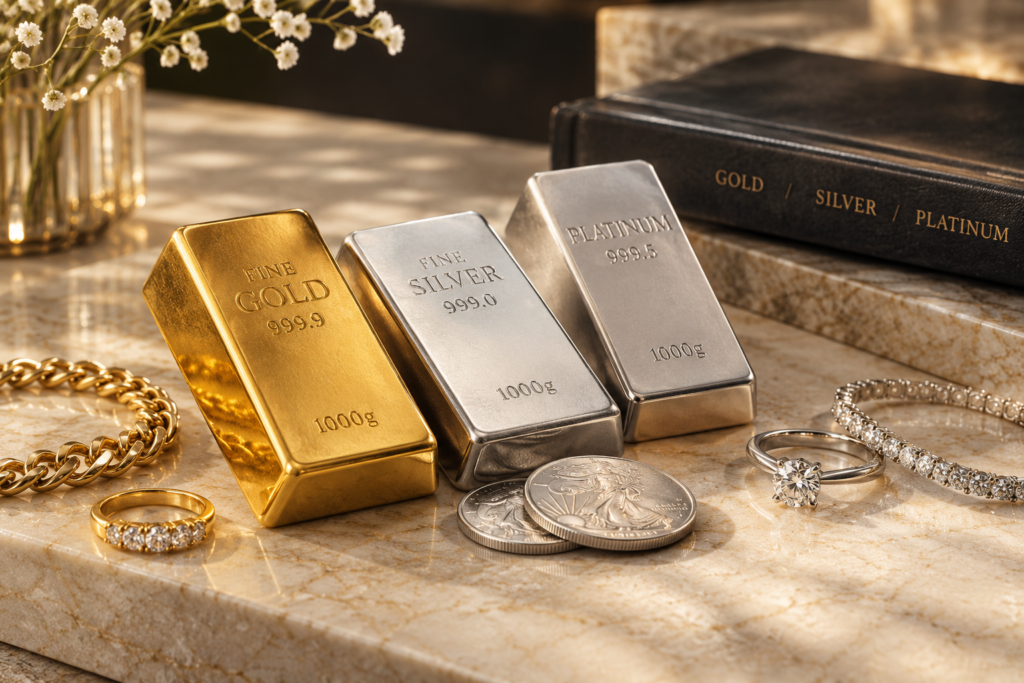
Gold remains one of the most recognized precious metals in the world. Its combination of rarity, durability, and widespread demand has made it a staple in jewelry and investment markets.
When evaluating a gold item, its purity, weight, craftsmanship, condition, and current market conditions all matter.
Gold jewelry is commonly alloyed with other metals to improve durability. This is why you’ll often see markings such as 24K, 22K, 18K, or 14K.
Silver: Versatile and Widely Used
Silver has a long history in jewelry, decorative objects, coins, and industrial applications.
Because silver is generally more accessible than gold or platinum, it can appear in a much wider range of objects. Its value depends not only on its weight and purity, but also on the market and, in some cases, the design or history of the piece.
Platinum: Rare and Naturally Durable
Platinum occupies a distinctive position among precious metals. It is naturally dense, durable, and resistant to corrosion, making it particularly popular for fine jewelry and certain industrial applications.
Its rarity and physical properties contribute to its market value, while the craftsmanship and condition of a finished piece can also influence what it is worth.
So, What Is Your Piece Worth?
The answer isn’t always found by looking at the metal alone.
A proper assessment considers the material, purity, weight, condition, craftsmanship, and current market context. Two objects containing similar amounts of precious metal can have very different values depending on what they are and how they were made.
That is why a conversation is often more useful than a quick estimate.
Every piece is different. Understanding what you own is the first step toward understanding its value.